

Walk through a freshly painted home and you’ll often notice something: the walls look smooth, soft, and free of glare. That look usually comes from flat paint. If you’ve hired a painting crew before, you may have wondered why do contractors use flat paint on so many jobs.
The answer comes down to three things: practical performance, aesthetic appeal, and cost. Flat paint solves real problems for both painters and property owners. In this guide, we’ll break down the reasons behind this industry favorite so you can make smart choices for your own space.
Here’s what you’ll learn:
- The key benefits that make flat paint a go-to for pros
- How flat stacks up against eggshell and satin finishes
- The best rooms and scenarios for flat paint
- Answers to the questions homeowners ask most

What Is Flat Paint, Anyway?
Flat paint is a finish with little to no shine. It absorbs light instead of reflecting it, which gives walls a soft, matte appearance.
That low sheen is exactly what makes it so useful. It hides flaws, evens out surfaces, and creates a clean backdrop for any room.
The Real Reasons Contractors Reach for Flat Paint
Professional painters don’t pick finishes at random. They choose flat paint because it makes the finished product look better with less effort. Let’s look at the biggest reasons why.
 It Hides Wall Imperfections
Most walls aren’t perfect. They have small dents, patched drywall, nail holes, and uneven texture from years of wear.
Flat paint’s matte surface scatters light, so those flaws practically disappear. Glossy finishes do the opposite. They highlight every bump and ripple, which means more prep work and higher costs for you.
Takeaway: If your walls have seen better days, flat paint for walls is the fastest way to make them look fresh again.
Touch-Ups Are Simple and Seamless
Here’s a problem that drives painters crazy: touching up shiny paint. When you dab satin or gloss over a scuff, the repaired spot often shows a different sheen.
Flat paint blends beautifully. A quick touch-up usually vanishes into the surrounding wall with no visible patch. That saves time on the job and keeps your walls looking uniform for years.
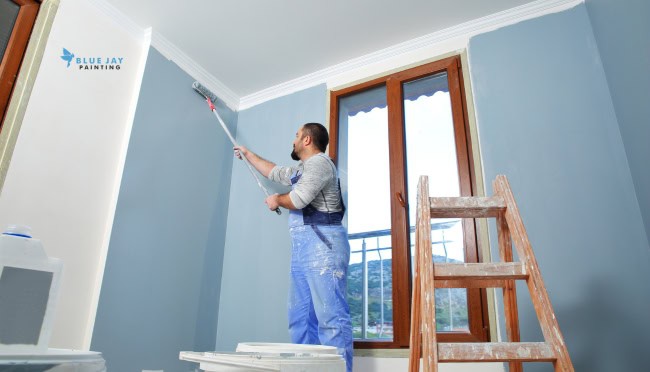 It’s Cost-Effective
Flat paint typically covers more surface in fewer coats. Better coverage means less product, less labor, and a lower total bill.
For property managers repainting multiple units, that savings adds up fast. Fewer coats plus easy touch-ups equals real value over the life of the paint.
Flat Paint vs. Eggshell/Satin: A Side-by-Side Look
Flat isn’t the only choice, and it isn’t right for every wall. Comparing finishes helps you see the tradeoffs clearly.
| Category | Flat Paint | Eggshell/Satin |
| Durability | Softer surface, less scrub-resistant | Tougher, handles frequent cleaning |
| Reflectivity | Very low sheen, hides flaws | Subtle to moderate sheen, shows flaws more |
| Ease of Application | Forgiving, blends well, easy touch-ups | Requires more care to avoid lap marks |
| Cost | Lower cost, better coverage | Slightly higher cost per gallon |
The right pick depends on the room and how much wear it will face. Both finishes have a place in a well-planned home.
Where Flat Paint Shines (Even Without the Shine)
Flat paint works best in spaces that stay clean and dry. It’s also ideal anywhere you want to hide surface flaws or create a calm, modern look.
Consider flat paint for these areas:
- Ceilings — the classic choice, since flat hides seams and imperfections
- Adult bedrooms — low-traffic and easy on the eyes
- Formal living and dining rooms — a soft, elegant backdrop
- Home offices — reduces glare from screens and lamps
- Older homes with textured or patched walls — masks years of wear
- Rental units between tenants — cheap, fast, and easy to touch up
When you’re weighing paint finishes for home projects, match the finish to how the room is actually used. That’s the secret pros rely on every day.
Frequently Asked Questions
Can you clean flat paint?
You can, but gently. Flat paint has a porous surface, so scrubbing hard can leave marks or dull spots.
Stick to a soft cloth, mild soap, and light pressure. For high-traffic areas that need frequent cleaning, a more durable finish may serve you better.
When should I upgrade to a different finish?
Choose eggshell, satin, or semi-gloss for rooms that face moisture, grease, or heavy hands. Think kitchens, bathrooms, hallways, kids’ rooms, and trim.
A simple rule: the more a surface gets touched or wiped, the more sheen you want. Everywhere else, flat usually wins.
Is flat paint good for exteriors?
Flat can work on some siding and stucco, especially to hide surface flaws. Still, many exteriors benefit from a bit more sheen for weather resistance. A local pro can recommend the best option for your home.
The Bottom Line for North Alabama Homeowners
Contractors lean on flat paint because it hides imperfections, touches up cleanly, and keeps costs down. For ceilings, bedrooms, and low-traffic spaces, it’s hard to beat.
The smartest approach is matching each finish to how you use the room. That’s where experience pays off, and where a trusted local team makes all the difference.
At Blue Jay Painting, we’ve spent over 20 years helping homeowners and property managers across Madison, Huntsville, Decatur, and North Alabama get the right finish in every room. We’re a family-owned crew that treats your home like our own.
Ready for walls that look their best? Request your free quote today by calling Blue Jay Painting at 256-836-9695.
Recent Comments